Nós utilizamos cookies para melhorar a sua experiência Saber mais.
Necessários para o funcionamento do site
Ajudam-nos a entender como utiliza o site
Bombarda Podcast - Small Businesses Against Big Threats
Podcast Bombarda - Trailer
Podcast Bombarda - Pequenos Negócios Contra Grandes Ameaças
In the heart of Bombarda, small businesses continue to be much more than commercial spaces — they are places of encounter, culture, and resistance. In this episode, we go behind the scenes with those facing the challenges of a rapidly transforming territory.
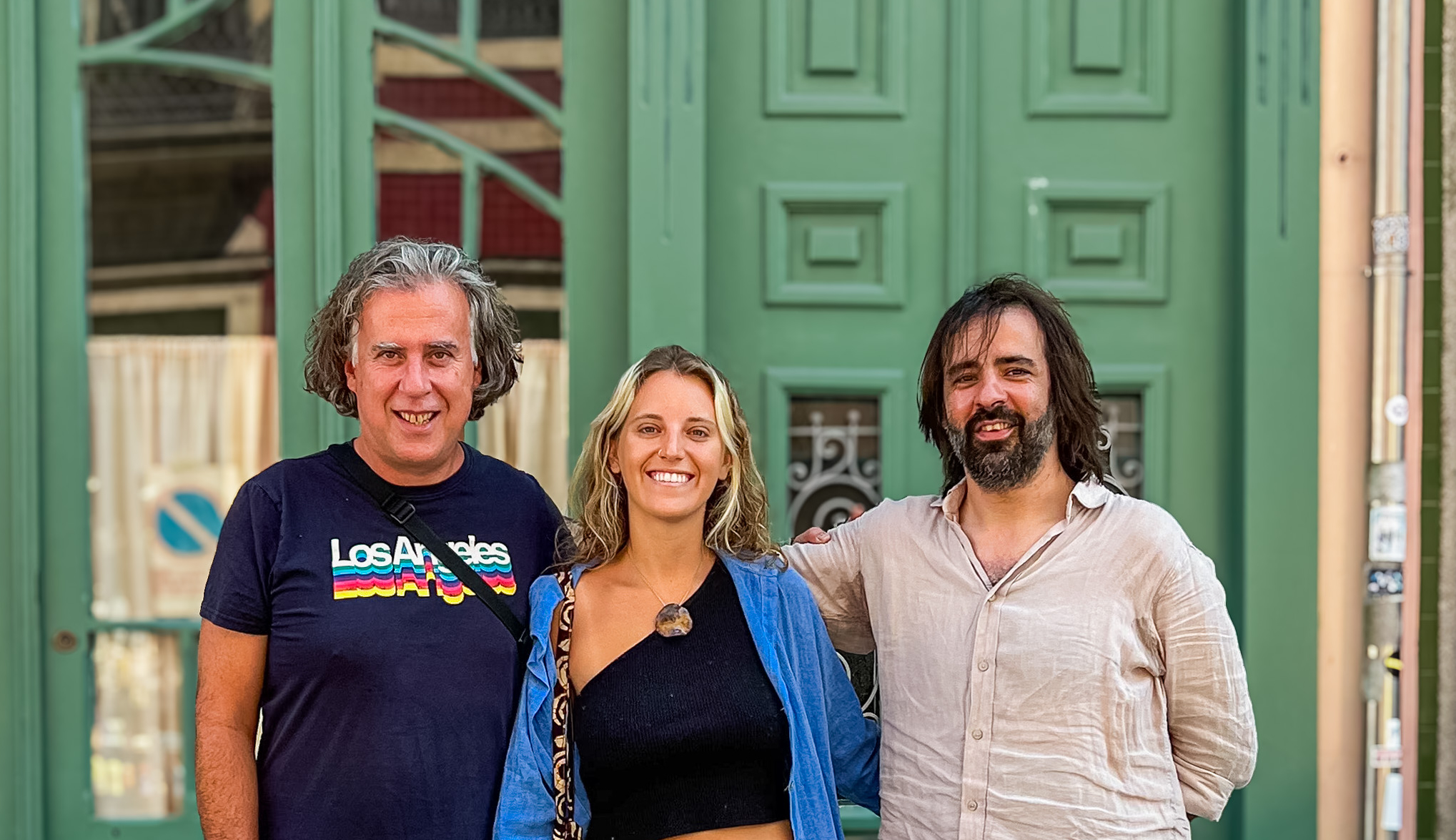
With Hélder Moura (Xau Laura) and Pipa Pinto do Souto (Viga Studios), moderated by Daniel Pires (Maus Hábitos), the conversation explores topics such as gentrification, mass tourism, sustainability, and the reinvention of local businesses.
Through real stories and adaptive strategies, a vision of the future emerges — one where staying is also a creative act, and where resisting means reinventing.
Why listen?
The episode Small Businesses Against Big Threats reflects on the challenges faced by independent projects in Bombarda within a context of constant change.
The conversation reveals how cafés, studios, and local shops develop strategies of resistance and adaptation, establishing themselves as key hubs of identity, culture, and community in the neighborhood.
The Bombarda Podcast is a series created by the Bombarda Digital team, giving voice to those who shape the neighborhood on a daily basis — across art, commerce, and community.
Each episode explores different dimensions of this creative territory, uncovering stories, practices, and perspectives that help imagine the future of Bombarda.
STORIES FROM
THE QUARTER
Discover the stories that fill the Bombarda Neighbourhood
Born in Lourenço Marques, now Maputo, Lígia Soromenho grew up surrounded by influences from different places and landscapes that continue to shape her creative vision. At the age of 19, she moved to Porto, where she studied Art History at the Faculty of Arts and Humanities of the University of Porto and built much of her personal and professional life.
In 2005, she began her entrepreneurial journey, which led to the creation of mordomias two years later. The brand designs and produces furniture, lighting and decorative objects, exploring the technical and aesthetic possibilities of composite materials such as resin and fibreglass.
“Objects tell stories and quietly contribute to shaping the places we call home.”
More recently, with the opening of the showroom at CC Bombarda, Capim Rose by mordomias was launched as a complementary concept that embraces materials and expressions with a more vernacular character. Its A Casa collection includes pieces such as the Chiado chairs and Chá tables, designed for spaces of connection, sharing and memory.
Q: How did your creative journey begin?
A: mordomias was born from the realisation that we could bring together different skills and areas of expertise, particularly through Filipe Tavares’ know-how and extensive experience in manufacturing technical components, especially for the automotive industry.
This experience brought an element of technical innovation to the project’s creative dimension. The properties of resin and fibreglass, for example, make it possible to produce outdoor furniture, opening up new functional and aesthetic possibilities.
From there, we began exploring different finishes and applications of these materials, developing pieces that gradually gave rise to the brand’s various collections.
Q: What led you to choose composite materials, such as resin and fibreglass, for furniture and lighting design?
A: It was precisely the discovery of the creative possibilities offered by these materials, combined with our existing technical expertise and production capabilities.
Q: If you had to choose three pieces or objects that capture the spirit of mordomias in Bombarda, which would they be and why?
A: mordomias’ presence in Bombarda began with Capim Rose, as a natural continuation of our journey, but with a distinct approach defined by the choice of materials.
The two concepts complement each other and share the same space. Within the world of Capim Rose, I would highlight three designs that were part of the first project developed by Capim Rose by mordomias in Braga. These pieces embody what drives us: sharing solutions and bringing design into the spaces we inhabit.
The first is a set comprising an ash wood and cane chair and a side table made from engineered wood, both reflecting the brand’s identity. I would also highlight the “Chiado” chairs, the first design created for the Capim Rose collection, and the “Chá” tables, the second design developed for the collection. (Reference images below)
Portfolio
The work of mordomias brings together design, material experimentation and the production of furniture, lighting and decorative objects. Through its various collections and bespoke projects, the brand explores the relationship between form, function and space, valuing both the technical aspects and the aesthetic expression of each piece.
With Capim Rose by mordomias, this creative universe expands to embrace new materials and influences, giving rise to objects that seek to establish a close connection with their surroundings and the people who inhabit them.
“GOTA / DROP” Lamps - The “GOTA” lamps, later renamed “DROP”, were launched at the Maison & Objet international trade fair in 2008 and selected in 2011 for an exhibition at Lafayette Maison as part of Paris Design Week.
“Open ID” Set + “GOTA / DROP” Lamps - Selected in 2011 for an exhibition at Lafayette Maison, the same year the “GOTA” lamps were featured during Paris Design Week.
“FLOWER” Armchair — Launched at the inaugural edition of The Oporto Show in 2010, held at Alfândega do Porto.
How to Collaborate
Mordomias develops furniture and lighting collections in a range of materials and finishes, combining design, technical expertise and production capabilities.
Alongside its own collections, the brand offers a bespoke design and production service, tailored to the specific characteristics and needs of each space or project.
The brand also undertakes interior design projects and provides furniture and lighting design consultancy, developing solutions that bring together functionality, aesthetics and attention to detail.
To explore the collections, discuss a proposal or commission a bespoke project, simply get in touch with the team or visit the shop and showroom at CC Bombarda.
Contacts
Website | Instagram | Facebook Email: geral@mordomias.pt Address: CC Bombarda - Rua de Miguel Bombarda, 285, Loja 10, Porto
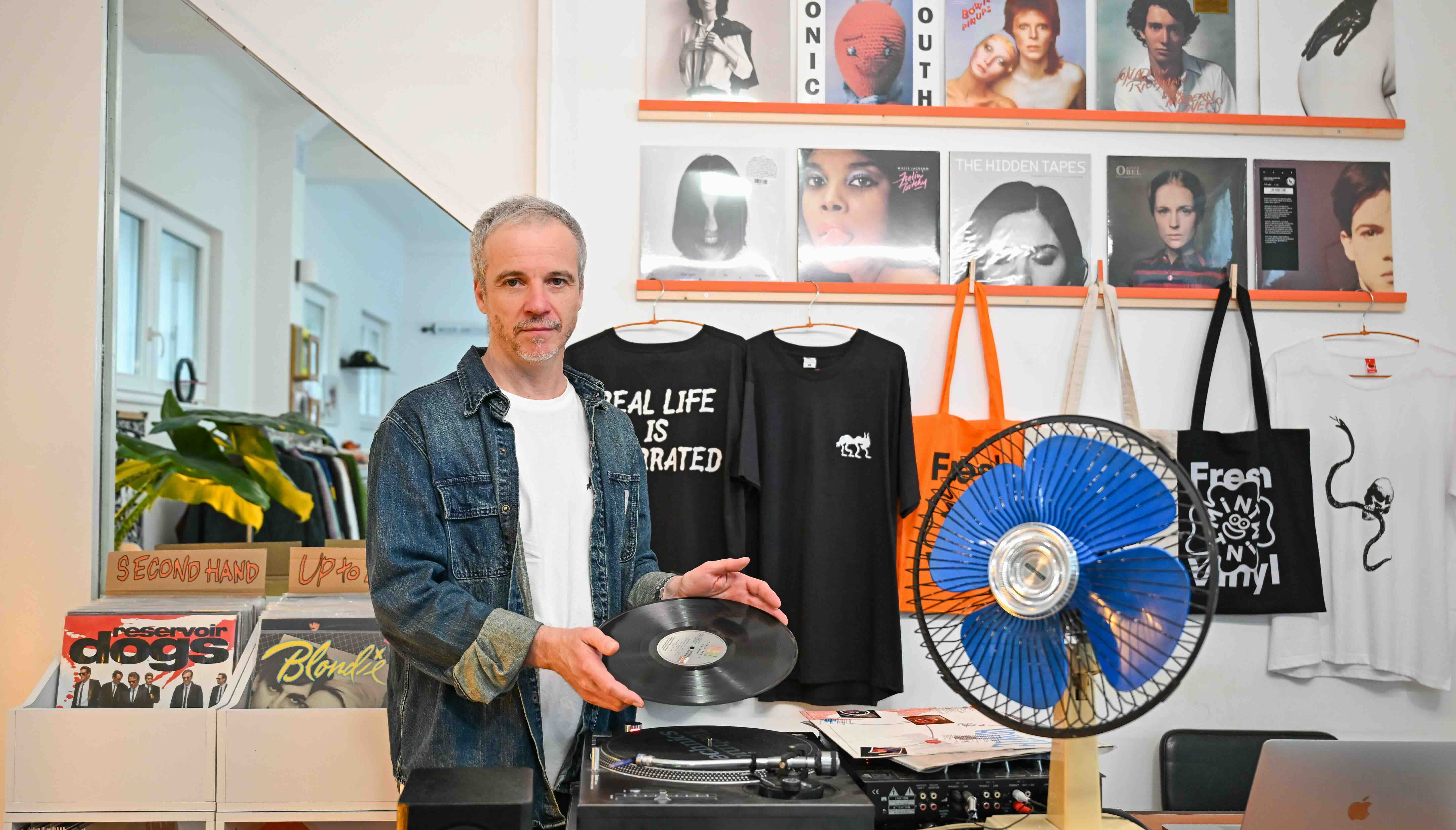
João Vieira's musical journey began long before the stages and dancefloors, with homemade cassette recordings, his siblings' records and an endless curiosity for music. In the late 1990s, London opened the door to forming bands, producing music and exploring club culture, experiences he would continue to develop after moving to Porto.
“My journey in music began very early, when I was around nine or ten years old.”
Over the years, he has released ten albums with X-Wife and his solo projects, while establishing himself as a DJ and club promoter through Club Kitten. In 2023, he also published the book The Story of Wolf with Stolen Books. More recently, he opened Mint Mint Record Shop on Rua do Breiner, giving a new dimension to a lifelong passion: digging for records, discovering artists and sharing music with others.
Q: How did your journey in music begin?
A: My journey in music began very early, when I was around nine or ten years old. I started by recording cassettes using my siblings' records, taping songs off the radio and making all sorts of mixtapes. That's where my passion for music began - collecting records, going to concerts, buying music magazines and recording music videos from MTV.
I didn't form my first band until I was 21, initially as a vocalist, and only later did I start playing guitar. A year later, I moved to London, where I formed another band and started writing songs. It was also around that time that I created Club Kitten, began my career as a DJ and club promoter, and worked at Tower Records in 2000.
While living in London, I graduated in Graphic Design and went on to design most of the X-Wife album covers, as well as flyers for Club Kitten, among other projects.
Q: What inspired you to open Mint Mint Record Shop?
A: I've always had a passion for music and vinyl. I've spent hundreds of hours in record shops looking for new music to play at Club Kitten and to add to my collection. Ever since I was a teenager, I've loved making mixtapes for other people and, more recently, I've also been involved in several radio projects.
I'm an avid music listener and I love discovering new things — whether they're recent releases or records I missed the first time around. I felt this was a natural next step, a new chapter in my life.
Over the past twenty years, I've released ten albums across my various projects, and I still run Club Kitten, perform live and work as a DJ. So taking on this new project makes perfect sense.
Besides, I think the vinyl revival is now undeniable. Ten years ago, I probably wouldn't have considered opening a record shop, but the current conditions make this kind of business much more viable.
Q: What new challenges would you like to take on in the coming years?
A: I don't think about it too much. I launched Wolf Manhattan three years ago, opened the shop this year and I'm still involved in all my other music projects, alongside the music production work I currently do for theatre productions, promotional videos for brands and museums.
My schedule is pretty full and I don't have much free time, so right now I'm focused on doing a good job with everything I have on my plate.
I'm not really someone who thinks too far ahead, especially because circumstances are constantly changing. I prefer to focus on the short term and the present moment.
Q: What do you enjoy doing when you're not working?
A: I enjoy spending time with my family, relaxing on the sofa with my pets, hanging out with friends, watching films, following skateboarding competitions on TV, travelling, going to concerts and visiting art exhibitions that inspire me.
I love discovering new things and, inevitably, talking to people in the shop has become a part of my daily routine that almost feels like leisure.
That's one of the reasons I enjoy having a shop: getting to talk to people of different generations and from all over the world. Sometimes, picking a record off the shelf sparks a conversation, and we end up discovering something new…
Q: If you had to choose three albums as the soundtrack to Bombarda, what would they be?
A: I love listening to hip hop in the shop. The playlist I've put together is almost entirely hip hop, so I'd pick these three records: - Neil Frances - There Is No Neil Frances - Little Simz - Lotus - Smerz - Big City Life
Portfolio
João Vieira's career spans different aspects of music-making, from songwriting and production to live performance, club culture and music curation. Through X-Wife, his solo projects White Haus and Wolf Manhattan, Club Kitten and Mint Mint Record Shop, his work reflects an ongoing relationship with music as a space for experimentation, artistic expression and discovery.
X-Wife - Feeding the Machine (2004) The debut album by X-Wife, a band founded by João Vieira, in which he is a songwriter, vocalist, guitarist and co-producer.
White Haus (2012) João Vieira's solo project, combining disco-punk, electronic music and indie, exploring a sound and aesthetic rooted in club culture and sonic experimentation.
Wolf Manhattan (2022) A solo project created by João Vieira, built around a fictional alter ego who writes and records music with minimal resources, embracing an intimate, lo-fi sound. The album features 13 songs exploring themes such as heartbreak, uncertainty and postponed dreams, creating a distinctive musical and narrative universe.
How to Collaborate
Mint Mint Record Shop is an independent record shop offering a personalised service, dedicated to music discovery and sharing, with a carefully curated selection of more than 600 titles, both new and second-hand.
From indie, post-punk and rock to world music, disco, hip hop, Balearic, dub, ambient and experimental music, the shop brings together a wide range of genres and sounds, with a strong emphasis on curation and personal connections with visitors.
More than just a place to buy records, Mint Mint aims to be a space for meeting people and discovering music, where every visit can lead to a conversation, a recommendation or a new musical discovery.
To explore the selection, uncover some of the hidden gems in stock or simply have a chat about music, drop by the shop in Bombarda.
Contacts
Instagram Location Email: mintmintrecordshop@gmail.com Address: Rua do Breiner, 32, 4050-124 Porto
With a background in Engineering and Landscape Architecture, José Pedro found in floral art a natural extension of a path long connected to landscape and botany.
Drawing on Eastern influences, modernism, tropicalism and a close relationship with place, he has developed a distinctive language where emotion, spontaneity and pragmatism coexist - always leaving room for surprise.
“I seek new ways to express the beauty and mystery of plants.” — Azuma Makoto
Q: How did your creative journey begin, and what led you to work with flowers and decoration?
A: I think it all began by chance, through a lot of trial and error. As part of my work as a landscape architect and farmer, clients began asking me to create floral arrangements. What initially started as an additional service gradually became something more serious.
Then came my sister's wedding, where I had complete freedom to create something different: a bouquet made from sun-weathered wood, green fruits and autumn flowers.
Q: Is there any training or experience that has particularly shaped your practice and your approach to floral design?
A: My background in Engineering and Landscape Architecture was fundamental in developing an aesthetic that combines emotion and seasonal materials with a touch of pragmatism and rationality.
The rest is refined through a great deal of work and practice. Sometimes working under pressure also helps a lot - it makes us resilient and focused.
Q: What are your main sources of inspiration - nature, art, fashion, architecture?
A: As I mentioned before, there are the influences from the East, my fascination with Arab culture, the sea and the landscape of the Ria de Aveiro.
Then there is architecture, the modernist movements and tropicalism, where I find an exoticism that is essential to my work. Roberto Burle Marx, Luis Barragán and our own Gonçalo Ribeiro Telles are some of my references - key figures in shaping a tropical, native and pared-back aesthetic.
“Less is more” is my new daily mantra.
Q: Is there any technique, visual language or trend that you are particularly excited to explore in the near future?
A: Beyond Japanese minimalism, I find a great sense of practicality in Nordic approaches - I am a fan of Belgian and Dutch designers - and I am fascinated by the art created by the German modernist movements.
And then there is the exuberance of Latin America. How could you not love the colours of Mexico, the aromas of Venezuelan cuisine or the flora of the Amazon?
The antipodes are the new trend of this decade…
Q: What does the Miguel Bombarda neighbourhood mean to you? Do you remember the first time you visited it?
A: I have been coming to Bombarda since 1995. That is 30 years of experiencing and discovering a vibrant neighbourhood full of hilarious stories.
For me, Bombarda's success rests on three fundamental pillars. First, Bombarda is feminine. Women are the heart of the neighbourhood.
They are the ones who keep things moving forward; their determination and strength of will are fundamental to helping this project grow and bear fruit. People talk a lot about female empowerment, but in Bombarda there has always been - and always will be - a distinctly feminine kind of grit.
“I think Bombarda is the Trojan horse of the city of Porto."
Second, Bombarda is like a three-Michelin-star restaurant where omelettes - the most delicious and delicate ones - are made without eggs.
Everything here is achieved through hard work and dedication, without major support, but with everyone's help. It is a very close-knit neighbourhood, and no one is forgotten.
And finally, I think Bombarda is the Trojan horse of the city of Porto. Bombarda exists to provoke. In Lisbon, Bombarda is associated with a psychiatric hospital; in Porto, we have a group of “mad people” who are constantly making things happen in the city.
I have always had the idea that Lisbon's cultural elite envied and aspired to Porto's Bombarda. And it is no coincidence that when we welcome clients from Lisbon - wonderful, much-loved clients - into our space, they always ask why there isn't a shop like this in the capital.
Portfolio
The practice of Violetas Creative Studio takes botany as a starting point, creating compositions in which flowers, foliage, fruits, textures and other natural elements become creative material.
Across floral design, decoration and events, each project seeks to establish a close relationship with the place, the moment and the people involved, privileging seasonality, sensitivity and the unique character of the materials.
Wedding and Social Event Decoration Floral arrangements and styling for weddings and social events, including decoration, floral design, drawing and illustration.
Floral Decoration with Ceramic Pieces Floral arrangement and decorative piece — Violetas Creative Studio. (Interior decoration featuring dried flowers and artistic ceramics.)
Handcrafted Lighting Handcrafted lamp created at Violetas Creative Studio. (A handmade piece focusing on texture, light and atmosphere.)
Custom Floral Arrangements Handcrafted bouquets and arrangements created by Violetas Creative Studio. (Handmade floral compositions tailored to each client’s style and occasion.)
How to Collaborate
Violetas Creative Studio is a space dedicated to art, botany, sensations and emotions.
It currently develops complete projects for social events and weddings, including decoration, floral design, drawing and illustration, with proposals tailored to each individual context.
To discover the work of Violetas Creative Studio, propose a collaboration or request a bespoke project, simply contact the studio directly.
In Bombarda, creativity is not confined to galleries or shop windows: it also happens in the ateliers and workshops that are part of the neighbourhood’s everyday life.
From metalwork and ceramics to furniture and designer objects, there are spaces where creation, production and presentation exist side by side. Places where you can meet the people behind the work, learn more about the materials and, sometimes, experience the creative process for yourself.
From the street to the studio, we visit five spaces that reveal a more intimate and handcrafted side of Bombarda.
Jewellery Experience
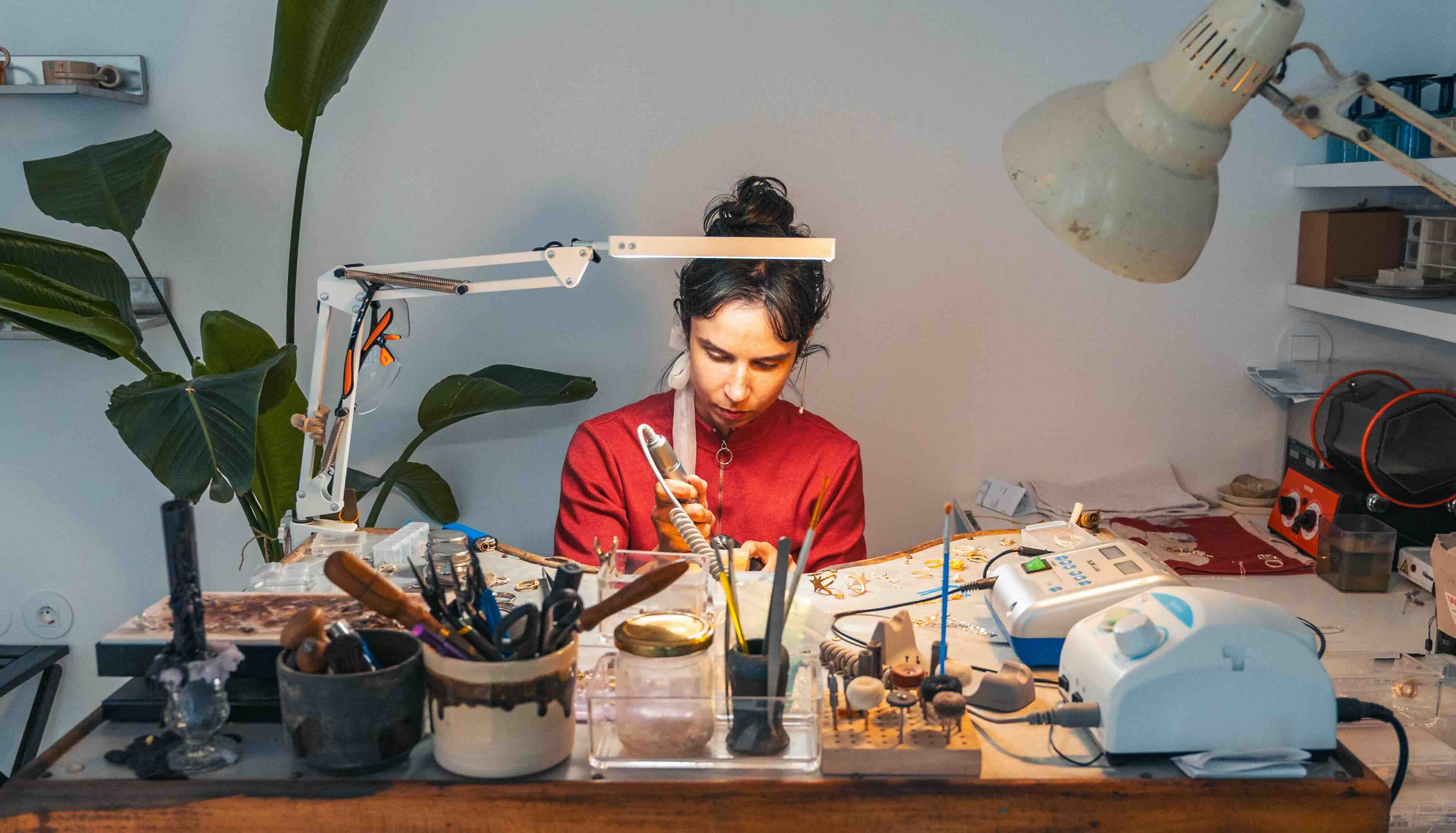
At CCBombarda, Jewellery Experience brings the world of jewellery closer to everyone who walks through its door. Created by designers Diogo Dalloz and Luma Boêta, it operates as both a shop and an atelier, presenting original pieces and bespoke projects. Here, jewellery can also become an experience.
The space offers different formats that invite visitors to discover the techniques and processes behind the craft, including jewellery-making experiences and workshops dedicated to creating wedding rings.
It is an opportunity to understand the work behind a piece — and, in some cases, to take part in creating it.
On Rua do Rosário, Tobe Atelier is Benedetta Grasso’s creative world, where jewellery and ceramics come together. Each piece is designed and handmade in Porto, celebrating the individuality of the materials and the subtle differences that make every object unique.
The atelier is both a place of work and discovery. Alongside its jewellery and ceramic collections, the project develops unique and bespoke pieces and hosts workshops where participants can experiment with both practices. Here, the handmade process is not hidden away: it is an essential part of each piece’s identity.
On Rua Adolfo Casais Monteiro, Ó! Cerâmica brings three dimensions together in one place: gallery, studio and shop. This combination naturally connects the exhibition space with the place where ceramics are imagined and made.
More than a place to find finished pieces, Ó! Cerâmica offers a closer look at a practice in which material, experimentation and creation are all part of the same journey.
It is a space that reveals Bombarda’s more hands-on, author-driven side.
At Alma Nova, furniture and objects for the home are given new stories. The project creates handcrafted furniture and home décor in Porto, focusing on individual pieces and an approach that values creativity and transformation.
Alongside its own creations, Alma Nova sources personalised pieces and gives existing furniture a new lease of life through creative interventions.
Its practical workshops add a participatory dimension to the project, inviting others to experience the pleasure of making things with their own hands.
Founded by Portuguese jeweller Ana Pina, Tincal lab is both a workshop and a gallery dedicated to contemporary jewellery. Based at CCBombarda since 2018, it brings creation, experimentation, exhibition and contact with the public together in a single space.
Under the motto curating and experimenting in contemporary jewelry, the project presents solo and group exhibitions, collaborations and workshops with guest jewellers, showcasing work by Portuguese and international artists.
More than a jewellery shop, it is a place to discover contemporary jewellery as a field of creation and experimentation.
In Bombarda, the distance between the person who creates a piece and the person who discovers it can be remarkably small.
These five spaces reveal a neighbourhood where ateliers, workshops, shops and galleries coexist, and where creative processes become part of the visitor experience. From ceramics and jewellery to furniture and designer objects, there are stories, techniques and materials to discover beyond the shop windows.
Discover Bombarda and what happens on the other side of the shop window, through the hands of the people who create here.
What can emerge from the encounter between an object with almost three centuries of history and Bombarda’s contemporary creative scene?
Afinidades is built upon this encounter between different periods, artistic languages and ways of seeing. In each edition, an object from the collection of the Soares dos Reis National Museum is chosen as the starting point, inviting artists connected to the Bombarda Quarter to develop new interpretations and establish relationships between heritage, place and contemporary creation. Following two editions dedicated to contemporary jewellery and ceramics in 2024 and 2025, the project returns in 2026 to explore a new artistic field: contemporary graphic practices.
The 2026 Edition — Contemporary Graphic Practices
Curated by Júlio Dolbeth, an illustrator, researcher and professor at the Faculty of Fine Arts of the University of Porto, this third edition invited artists working in or represented within the Bombarda area to create original works inspired by an object from the collection of the Soares dos Reis National Museum.
The project also features exhibition design by Sílvia Pinto Costa and production by Marina Costa and Vera Gonçalves, as part of a team bringing together members of both partner institutions.
The starting point was an English-style glass mug produced at the Royal Glass Factory of Coina between 1719 and 1747. Made from carefully cut, transparent colourless glass, the piece bears witness to the technical development of Portuguese glassmaking in the eighteenth century and to the circulation of knowledge and influences within the European context.
The transparency, brilliance, volume and history of this utilitarian object opened up multiple possibilities for interpretation. Through drawing, illustration, collage, printmaking and mixed-media practices, the artists were invited to translate matter into image and establish new relationships between object, memory and narrative.
The 2026 edition began on 28 March with a public session at the Soares dos Reis National Museum. The event introduced the programme, its source of inspiration, the curatorial approach and the open-call process, bringing together representatives from the Museum, Associação Quarteirão Criativo and the artistic community.
The presentation of the English-style glass mug by Paula Oliveira, manager of the Museum’s Furniture, Glass and Print collections, provided insight into the object’s historical, material and museological context. The session also revealed how an apparently simple object can hold multiple stories of production, circulation, use and transformation.
The programme extended beyond the open call. In May, the Museum hosted the Laminado Gráfico workshop, led by Júlio Dolbeth and Marta Belkot. Using Tetra Pak packaging repurposed as printing plates, participants explored the principles of intaglio printing and new ways of translating the volume and transparency of glass onto the surface of paper.
Through these different moments, Afinidades became more than an exhibition: it developed into a shared process of encounter, learning and creation involving artists, institutions and audiences.
Forty-Nine Interpretations of a Single Object
The outcome of this journey can now be seen in the exhibition Afinidades 2026 — Contemporary Graphic Practices, which opened on 25 July in the Sala das Pedras at the Soares dos Reis National Museum.
The exhibition brings together 49 works by artists connected to the Bombarda Quarter. Starting from the same object, each participant developed a unique interpretation, revealing the diversity of artistic languages, techniques and perspectives that characterises contemporary creative practice in the area.
Together, the works transform the English-style glass mug into a starting point for multiple narratives. Between the permanence of glass and the fragility of paper, between historical memory and a contemporary gaze, they show how heritage can remain alive when it is questioned, reinterpreted and brought into dialogue with new artistic practices.
Until 13 September, visitors can vote in person. The public vote, together with the jury’s assessment, will contribute to the selection of the winning work. The exhibition remains on view until 11 October 2026.
Afinidades thus establishes itself as a platform connecting the Soares dos Reis National Museum with Bombarda’s creative ecosystem. By bringing together heritage, place and contemporary creation, the project opens up new possibilities for discovery, both for Museum visitors and for those who live, work and create in the quarter.
Afinidades 2026 — Contemporary Graphic Practices Venue: Museu Nacional Soares dos Reis Dates:
Exhibition open until 11 October 2026
Public voting open until 13 September 2026
Photos: Associação Quarteirão Criativo, by João Octávio Peixoto
This edition of Afinidades is promoted by the Soares dos Reis National Museum in partnership with Associação Quarteirão Criativo, with patronage from the Super Bock Group, sponsorship from DORF and support from Círculo Dr. José de Figueiredo — Friends of the Soares dos Reis National Museum.
With a background in Fine Arts and a career spanning photography, design, ceramics, curating and teaching, Sílvia has developed a multidisciplinary practice in which different creative disciplines naturally inform and enrich one another.
At SCAR-ID, this journey takes shape through a curatorial approach grounded in quality, sustainability and the promotion of independent designers and makers.
"Ethics cannot be taught; it comes from within. Sustainability, in turn, is a responsibility that comes with the way we choose to position ourselves in society."
Q: How did your creative journey begin? How did it lead you to where you are today? What influence has your Fine Arts background had on your career?
A: My degree in Fine Arts at the Faculty of Fine Arts of the University of Porto gave me a broad foundation that allowed me to work across different creative disciplines over the years. I've worked in photography, ceramics, design, curating and teaching, and I feel that this education is the thread that connects all the professional experiences I've accumulated.
Interestingly, I haven't painted since graduating. Perhaps one day I'll return to it.
My career has unfolded quite naturally, without a defined plan. Each opportunity led to the next — from photography to teaching, from Art History to coordinating the Product Design programme at IAI, and more recently to ceramics, where I rediscovered the pleasure of working directly with the material.
Q: Has any particular education or professional experience shaped your perspective on the relationship between design, ethics and sustainability?
A: My background in Fine Arts was fundamental in developing a broad understanding of the creative disciplines. In the case of SCAR-ID, much of what we've learned has come through twelve years of hands-on experience, facing challenges and finding creative ways to respond to them.
Ethics cannot be taught; it comes from within. Sustainability is a natural extension of that mindset. By introducing new products into an already saturated market, we believe it is our responsibility to do so with a sense of purpose, encouraging more conscious consumption: buying less, but buying better.
For us, sustainability is above all about proximity, responsibility and care.
Q: How would you describe the curatorial approach behind SCAR-ID? What role does having a physical space play in the project?
A: Curating happens very organically. I'm constantly paying attention to what's happening across the creative fields, so whenever I feel the need to introduce a new brand, organise an exhibition or host a conversation, it all comes together quite naturally.
Having a physical space is absolutely essential. We work with tangible objects and real people, and the shop-gallery is where those two dimensions come together.
I strongly believe in the importance of a vibrant city — one shaped by independent shops, galleries, cafés, studios, florists and cultural spaces that bring urban life to the streets. I feel that SCAR-ID is part of that dialogue and that ecosystem. To me, maintaining a physical shop-gallery is almost a manifesto in support of urban life and human connection.
SCAR-ID simply wouldn't make sense without that physical space.
Q: What are the biggest challenges facing independent and sustainable design in Portugal today?
A: The main challenge remains the same: the limited purchasing power of Portuguese consumers. The products we present are fairly priced for the people who create them, but they are not always compatible with the country’s economic reality.
At the same time, small brands also face major production challenges. There is still limited openness within the industry to collaborating with independent designers and projects.
Q: What does the Miguel Bombarda neighbourhood mean to you?
A: We've been based in Bombarda for more than twelve years, and during that time the neighbourhood has evolved significantly. While it was once defined primarily by its art galleries, today it is also home to independent shops, studios, cafés, florists and many other projects that give it a distinctive character. It's this diversity that makes Bombarda such a special place to work.
There is a genuine sense of community, mutual support and closeness here. We know one another, we collaborate, and we know we can rely on each other whenever it's needed.
Portfolio
SCAR-ID brings together curating, independent design and artistic practice, showcasing independent brands, responsible production and projects spanning a range of creative disciplines, from ceramics to contemporary design.
SCAR-I10 — Open Call / Exhibition (2023) A project celebrating SCAR-ID's tenth anniversary, bringing together more than 50 participants through a multidisciplinary open call, a series of conversations and a final exhibition.
Liquid Amalgam — Stoneware Vase with White Glaze A ceramic piece created by the artist as part of SCAR-ID's 10th Anniversary Open Call. It is part of the ATER collection.
Jacket — Black Acrylic on White A piece from the ATER × LIV collection, created in collaboration with the brand LIV.
How to Collaborate
SCAR-ID is dedicated to curating and promoting independent designer brands and makers, bringing together fashion, accessories, ceramics and design objects produced with care and responsibility.
Alongside its shop-gallery, SCAR-ID also develops creative consultancy projects, curatorial collaborations, partnerships and mentoring for independent brands.
Whether you would like to discover the represented brands, propose a collaboration or visit the space, the SCAR-ID team is always happy to welcome new projects and new ideas.